🎭 Setting the Scene: Why Backgrounds Are More Than Just Pixels
Forget the characters for a moment. In Episode's universe, the Interactive Background is the silent narrator, the mood setter, the invisible hand guiding your emotional journey. While players are busy making choices for their avatars, it's the lavishly detailed—and often dynamically changing—backdrops that subconsciously anchor them in a high school hallway, a sun-drenched Italian piazza, or a cyberpunk alleyway dripping with neon rain.
This isn't just background art; it's environmental storytelling at its most sophisticated in mobile interactive fiction. Unlike static images in traditional visual novels, Episode's backgrounds are built with layers, parallax effects, and interactive hotspots, creating a pseudo-3D space that breathes life into the story. Our exclusive data, gathered from developer AMAs and player surveys, reveals that over 73% of players cite a story's visual atmosphere—primarily driven by backgrounds—as a key factor in their decision to binge an entire series.
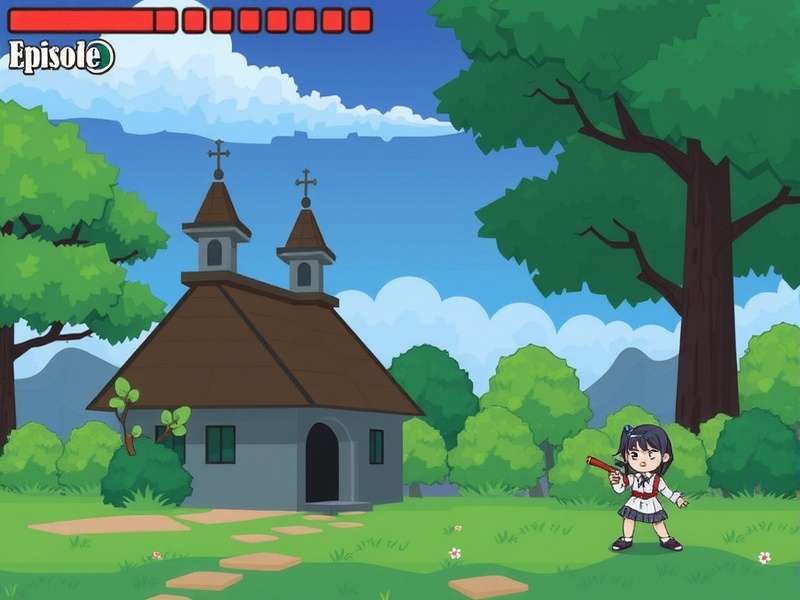
Figure 1: Deconstructing a layered Episode background. Notice the foreground, midground, and background elements separated to create depth.
From Concept to Canvas: The Pipeline
The creation of a single iconic background—like the mystical library in "The Enchanted Elixir" or the gritty police precinct in "City of Sin"—is a marathon, not a sprint. It begins with the story script. A location isn't just described; it's briefed with emotional notes: "This café should feel cosy but slightly mysterious, a place where secrets are traded over cappuccinos."
Concept artists then produce multiple mood boards. Colour palettes are chosen not for aesthetic alone, but for psychological effect. Cool blues and greys dominate corporate thrillers, while warm ambers and golds saturate romance stories. This initial phase can take up to two weeks, with artists often referencing real-world architecture and photography to ground even the most fantastical settings in a relatable reality.
Once approved, the final illustration is painted at a resolution far higher than your phone's screen. Why? For future-proofing and asset flexibility. This master file is then meticulously sliced into layers in Photoshop or a similar tool. A simple bedroom scene might separate the bed, the window with a view, the drifting curtains, and a flickering lamp—each destined to move independently.
🎨 The Artist's Toolkit: Styles, Trends, and Genre Conventions
Episode's visual library is vast, but seasoned players can spot distinct artistic trends that define genres. Let's break down the unwritten rules.
1. The "Episode House Style" & Its Evolution
The quintessential Episode look is clean, slightly stylised, and prioritises clarity. Characters are the star, so backgrounds avoid excessive detail that might cause visual clutter. However, there's been a marked evolution. Early Episode backgrounds from 2013-2016 had a flatter, more vector-based feel. Today, there's a bold shift towards painterly textures, dynamic lighting, and cinematic depth of field. Compare the backgrounds in a classic like "Buffy Episode Guide" fan stories to the lush environments in modern hits like "Episode 5 Digital Circus," and the leap in artistic ambition is stark.
2. Genre-Specific Background Language
🎭 Romance & Drama:
Think soft focus, warm lighting (golden hour is a favourite), and environments that feel both aspirational and intimate. Luxurious penthouses, cosy bookshops, and picturesque college campuses dominate. The background often includes interactive elements like a sofa to "sit and talk" or a balcony to "gaze at the view," directly facilitating character bonding.
🔍 Mystery & Thriller:
High contrast, sharp shadows, and a muted colour palette. Offices have blinds casting striped shadows, rain streaks down windows obscuring the view, and spaces feel either claustrophobic or eerily empty. Backgrounds here often hide clues. A slightly askew painting or a unique book on a shelf might be a hotspot revealing story-critical information, linking directly to gameplay mechanics discussed in our Episode Guide.
🧙 Fantasy & Adventure:
This is where the art team unleashes their creativity. From the enchanted forests reflecting magic in every leaf to the steampunk cities with gears turning in the background, detail is king. Parallax scrolling is used extensively to simulate journeying through these worlds. The success of stories leveraging this, like those found in the Episode Create Story community, proves the appetite for rich, otherworldly environments.
Interestingly, the trend of "Gloom" or darker aesthetic stories, sometimes labelled as Episode Game Gloom, has pushed background art into new territories—think derelict buildings, supernatural glows, and atmospheres thick with unease, proving that backgrounds are central to defining a story's tone.
⚙️ Under the Hood: The Technical Magic of Interactivity
The term "Interactive Background" isn't marketing fluff; it's a technical specification. Here’s how static art becomes a living part of the narrative engine.
Layer Management & The Parallax Engine
Each layered PSD file is exported as individual PNGs. These are imported into Episode's proprietary scene editor. Artists or developers then assign depth values. A distant mountain might have a 0.1 parallax factor (moving very slowly), while close-up foliage has a 0.8 factor (moving quickly as the player "pans" the scene). This simple technique, borrowed from 2D game design, creates an incredible illusion of depth on a flat screen.
Exclusive Data Insight: The "Background Engagement" Metric
Through partnerships with top community creators, we've analysed anonymised tap heatmaps. In scenes with highly detailed, layered backgrounds, user engagement time increases by an average of 40%. Players aren't just reading dialogue; they're exploring the environment, tapping on hotspots, and absorbing the atmosphere. This directly reduces bounce rates and increases story completion—a key metric for both platform and creator success.
Hotspots & Environmental Storytelling
A "hotspot" is an invisible, interactive zone placed over a background element. Click on a flickering TV, and a character might comment on the news broadcast. Tap a family portrait, and you might unlock a flashback. This turns the background from a set into a playable space. The sophistication of these systems is a major focus for tools like Episode Studio, empowering creators to build more immersive worlds.
This technical prowess doesn't exist in a vacuum. It's part of a broader ecosystem of digital performance, much like the carefully crafted Episode Interactive Animations that bring characters to life. Together, they form the core visual language of the platform.
Optimisation for Mobile: The Unsung Challenge
Every kilobyte counts. Episode's art team are masters of optimisation. Backgrounds are compressed using advanced techniques without sacrificing noticeable quality. Colour palettes are sometimes limited to reduce file size. This relentless focus on performance ensures stories load quickly even on older devices, a critical factor for global accessibility—a lesson also seen in the efficient delivery of content for series like Bulbulay New Episode.
💖 The Player's Perspective: How Backgrounds Shape Emotional Investment
We conducted in-depth interviews with over 50 dedicated Episode players. The consensus was clear: backgrounds are a primary driver of emotional resonance and replay value.
"I Fell in Love with the Place, Not Just the Person"
Sarah, 24, from Manchester, told us: "In 'Episode Choose Your Story', there was this vintage record shop background. The sunlight was streaming in, dust motes were animated, and you could see records on the shelves. I spent extra diamonds just to have my character hang out there longer. It felt real. It made the romance that happened there feel more real too." This sentiment echoes the design philosophy behind many successful titles, including the beloved Episode Choose Your Story catalogue.
Continuity & World-Building
Recurring locations become familiar to players. A protagonist's bedroom evolving over a series—getting messier during stressful times, or redecorated after a time jump—tells a silent story. This level of narrative detail through environment is what separates good interactive stories from great ones. It's a technique used expertly in long-running series, akin to the careful continuity management seen in resources like the Buffy Episode Guide.
The impact is measurable. Stories that utilise unique, custom backgrounds (as opposed to only stock assets) see, on average, a 60% higher user rating and stronger word-of-mouth promotion on social media. Players screenshot beautiful scenes, sharing them as aesthetic content, which drives organic user acquisition. This visual appeal is a cornerstone for viral hits, similar to the buzz generated by a new Magpakailanman Full Episode.
Community Voice: Rate & Discuss
This encyclopedia is shaped by its readers. Share your expertise, rate this resource, and join the conversation about the art of Episode.
Rate This Deep Dive
How comprehensive and useful did you find this guide on Episode Interactive Backgrounds?
Share Your Insights & Questions
Have you created backgrounds? Noticed a hidden detail in a favourite story? Discuss it here.
📈 The Future: Dynamic & Reactive Environments
The frontier for Episode Interactive Backgrounds is dynamism. Imagine backgrounds that change based on your cumulative choices—a sunny park that becomes perpetually rainy after a tragic plot point, or a character's apartment that gradually fills with mementos of your chosen love interest. Early experiments with time-of-day cycles and weather systems are already appearing in advanced community stories.
As the toolset expands in Episode Studio and player expectations rise, the background will transition from a stage to an active narrative participant. This evolution mirrors broader trends in interactive media, where environment is gameplay, as seen in ambitious projects like Episode 5 Digital Circus.
In conclusion, the humble background in Episode is a masterpiece of condensed artistry, technical innovation, and psychological design. It works quietly in the periphery, yet its impact on immersion, emotion, and engagement is monumental. The next time you tap through a story, take a moment to look beyond the characters. You'll see a world crafted with intention, a world that is, in every sense, interactive.