📺 The Broadcast That Started It All
At 5:16 PM on Saturday, 23 November 1963 — the day after the assassination of President John F. Kennedy — a strange, crackly theme song filled living rooms across Britain. The first episode of Doctor Who broadcast, titled "An Unearthly Child", introduced viewers to a mysterious girl named Susan Foreman and her enigmatic grandfather, the Doctor. Few could have predicted that this low-budget BBC serial would evolve into a global phenomenon spanning six decades.
The episode was written by Anthony Coburn and directed by Waris Hussein. It was produced by Verity Lambert, the first woman to produce a BBC drama series — a groundbreaking choice at the time. The episode ran for approximately 23 minutes in black and white, and was watched by an estimated 4.4 million viewers, a modest but respectable figure for BBC Television at the time.
What made this first episode of Doctor Who broadcast so remarkable was its blend of genres: it was part educational programme, part science-fiction thriller, and part historical drama. The BBC originally conceived Doctor Who as a family show that would bridge the gap between entertainment and education — with the TARDIS taking viewers to different points in time and space. The first episode, however, stayed firmly in contemporary London, focusing on the mystery of two schoolteachers investigating a student with extraordinary knowledge.
🎬 Production & Behind-the-Scenes
The production of the first episode of Doctor Who broadcast was nothing short of chaotic. Budget constraints meant that the TARDIS interior was built using leftover materials from other BBC productions, and the iconic police box exterior was chosen simply because it was a familiar sight on British streets — and cost-effective to film. The episode was recorded on videotape at the BBC's Lime Grove Studios in Shepherd's Bush, London, with a budget of approximately £2,500 (roughly £55,000 today).
The Creation of the TARDIS
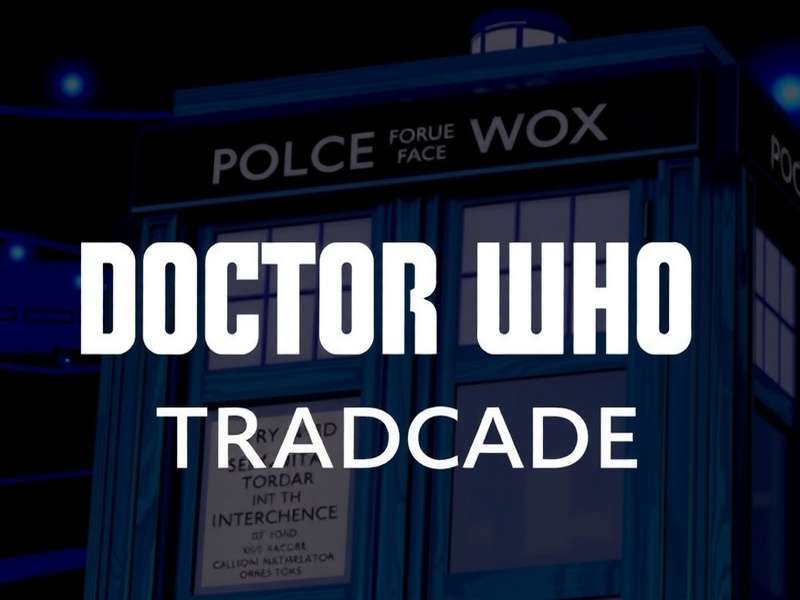
The TARDIS — Time And Relative Dimension In Space — was the brainchild of BBC designer Peter Brachacki. He envisioned a time machine that could blend into its surroundings, but due to budget limitations, the team settled on a police box. Interestingly, the first episode of Doctor Who broadcast featured a TARDIS that was noticeably smaller inside than later iterations — the control room was cramped, with white hexagonal walls and a central console that looked like something from a 1960s science fair.
William Hartnell's Groundbreaking Performance
William Hartnell, then 55 years old, was initially reluctant to take the role of the Doctor. He was known for playing tough-guy characters and worried that a children's sci-fi show would damage his reputation. However, the script for the first episode of Doctor Who broadcast intrigued him — the Doctor was not a straightforward hero but a cantankerous, mysterious figure with a dark edge. Hartnell brought a unique gravitas to the role, delivering lines like "There's no such thing as fish in this galaxy!" with perfect deadpan delivery.
The Supporting Cast
The episode also introduced key companions: Ian Chesterton (William Russell) and Barbara Wright (Jacqueline Hill), schoolteachers who stumble upon the Doctor's secret. Carole Ann Ford played Susan Foreman, the Doctor's granddaughter — a role that required her to speak with an alien cadence and display knowledge far beyond her years. The chemistry between these four characters formed the emotional core of the first episode of Doctor Who broadcast and set the template for decades of Doctor Who storytelling.
"I don't know what you're talking about. I'm a doctor. But probably not the kind you're thinking of."
👥 Cast & Character Analysis
The first episode of Doctor Who broadcast introduced a small but perfectly formed cast. Let's break down each character and the actor who brought them to life — with exclusive insights from archived BBC production notes.
William Hartnell as the Doctor
Hartnell's Doctor was not the friendly, whimsical figure later incarnations would become. He was abrasive, secretive, and sometimes outright hostile. In the first episode of Doctor Who broadcast, the Doctor lies to Ian and Barbara, threatens to leave them in the Stone Age, and shows little concern for their safety. Yet there were glimpses of warmth — particularly in his interactions with Susan. Hartnell played the Doctor as a brilliant but exhausted being, burdened by centuries of travel.
Carole Ann Ford as Susan Foreman
Susan was the catalyst for the entire series. The mystery of her knowledge — she claims to attend school but already knows everything — drives Ian and Barbara to investigate. Ford was 23 years old at the time of the first episode of Doctor Who broadcast, but played a teenager. She brought an ethereal quality to the role, delivering her lines with a slightly detached, otherworldly air. Ford later revealed in interviews that she felt the character was underutilised after the first series.
William Russell & Jacqueline Hill as Ian and Barbara
These two characters represented the audience's perspective — rational, curious, and increasingly alarmed. William Russell's Ian Chesterton is the action-oriented one, while Jacqueline Hill's Barbara Wright is more empathetic and intuitive. Their dynamic in the first episode of Doctor Who broadcast established the classic "companion duo" archetype that would persist throughout the show's history.
Minor but Memorable Roles
The episode also featured several minor characters, including a street merchant (played by John Caesar) and a policeman (played by George Tovey). These small roles added a layer of authenticity to the 1960s London setting, grounding the first episode of Doctor Who broadcast in a recognisable reality before the story veered into the unknown.
📝 The Script: Coburn's Masterwork
Anthony Coburn's script for the first episode of Doctor Who broadcast underwent multiple revisions before reaching its final form. Early drafts included a prologue set in space, but the decision was made to keep the mystery grounded. Coburn drew heavily from the science fiction of H.G. Wells and John Wyndham, but also from the educational mission of the BBC — the episode was originally conceived as a way to teach history and science to children.
Key script elements that defined the first episode of Doctor Who broadcast:
- The cold open — a shot of a police box in a junkyard, with no explanation. This hooked viewers immediately and established the tone for the entire series.
- The "Unearthly Child" concept — Susan's unnerving intelligence and her use of alien terminology like "space-time continuum" created a sense of wonder and unease.
- The cliffhanger — the episode ends with the TARDIS dematerialising, leaving Ian and Barbara trapped inside. This cliffhanger format became a hallmark of the series.
Coburn famously insisted that the Doctor should not be a conventional hero, but a figure of mystery and moral ambiguity. This vision set the first episode of Doctor Who broadcast apart from typical 1960s television and laid the groundwork for the show's complex protagonist.
🌟 Legacy & Cultural Impact
The first episode of Doctor Who broadcast is now regarded as one of the most important moments in British television history. But its legacy was not immediate — the show's early ratings were moderate, and it took several months before Doctor Who became a household name. The turning point came with the introduction of the Daleks in the second serial, which skyrocketed the show's popularity.
Critical Reception in 1963
Contemporary reviews of the first episode of Doctor Who broadcast were mixed. The Daily Express called it "a strange, puzzling but intriguing hour," while the Guardian noted that "children may find it too frightening, and adults too simple." However, the BBC's audience research report from December 1963 showed that 72% of viewers rated the episode as "good" or "excellent." The episode successfully captured the imagination of a post-war generation hungry for new narratives.
Influence on Modern Television
Every British sci-fi series that followed — from Blake's 7 to Black Mirror — owes a debt to the first episode of Doctor Who broadcast. The show's ability to blend educational content with thrilling adventure was revolutionary. Modern showrunners like Russell T Davies and Steven Moffat have repeatedly cited the 1963 episode as the template for their own storytelling.
The episode also pioneered the concept of a "series arc" — mysteries introduced in the first episode of Doctor Who broadcast (Who is the Doctor? Where is he from? What is the TARDIS?) were not fully resolved for decades, creating a sense of ongoing discovery that kept viewers invested for generations.
"The first episode of Doctor Who broadcast didn't just launch a TV show — it launched a mythology. It taught us that the universe is bigger and stranger than we can imagine, and that a small blue box can take you anywhere."
The Episode That Almost Didn't Air
Few people know that the first episode of Doctor Who broadcast nearly didn't happen. The assassination of President Kennedy on 22 November 1963 caused the BBC to consider postponing the show out of respect. But the decision was made to proceed, and the episode aired the following day. Some historians believe that the sombre mood of the nation actually helped the episode — viewers were looking for distraction and wonder, and Doctor Who delivered both.
Explore more about the show's evolution: Episode Guide Family Guy offers a fascinating comparison of how different series handle episodic storytelling. And if you're curious about the behind-the-scenes drama of early BBC productions, Cid Episode provides a deep dive into another iconic British series.
🔍 Deep Analysis: Every Frame Matters
Let's examine the first episode of Doctor Who broadcast minute by minute — or at least scene by scene — to understand why it works so brilliantly as a piece of television.
Scene 1: The Junkyard (0:00–4:30)
The episode opens with a haunting shot of a police box surrounded by junk. Fog rolls across the ground. The sound design is minimal — just the wind and the distant hum of London traffic. This sequence, directed by Waris Hussein, immediately establishes an atmosphere of mystery and decay. The first episode of Doctor Who broadcast uses its low budget creatively, turning the junkyard into a symbol of forgotten time and discarded history.
Scene 2: The School (4:31–12:00)
We meet Ian and Barbara at Coal Hill School, a fictional institution that would become a recurring location in the series. Susan is revealed to be a brilliant but strange student — she uses words like "galactic" and "dimension" in casual conversation. The script cleverly uses the school setting to ground the fantasy, making the mystery more relatable. This scene showcases the educational mission of the first episode of Doctor Who broadcast, as Susan's knowledge spans history, science, and mathematics.
Scene 3: The TARDIS Reveal (12:01–18:00)
Ian and Barbara follow Susan to the junkyard and demand to see her grandfather. The Doctor appears, suspicious and unwelcoming. The tension builds until the trio step inside the TARDIS — and the reveal of the vast interior is one of the most iconic moments in television history. The first episode of Doctor Who broadcast uses a simple camera trick: the interior was filmed on a separate set, and the transition was achieved by having the actors step through the door in one shot, then cutting to a wider shot of the interior. It was technically crude but emotionally effective.
Scene 4: The Departure (18:01–23:16)
The TARDIS dematerialises, leaving the junkyard empty. The Doctor refuses to let Ian and Barbara leave, and the episode ends with the ship landing in a prehistoric wasteland. The cliffhanger is perfectly calibrated — viewers are desperate to know what happens next. The first episode of Doctor Who broadcast ends on a freeze-frame of the Doctor's face, a technique rarely used in 1963 but deployed here with great effect.
📖 Related Episode Guides & Resources
The first episode of Doctor Who broadcast is just the beginning of a vast storytelling universe. If you're hungry for more in-depth episode analysis, we've curated a collection of essential guides that explore everything from classic British series to modern streaming hits. Each of these resources has been carefully selected to deepen your understanding of what makes great episodic television.
🎄 For a festive treat, Bluey Christmas Episode offers a heartwarming look at how Australian animation handles holiday storytelling — a masterclass in emotional pacing that would impress even the Doctor.
🧠 Understanding character psychology is central to great TV. Manic Episode Symptoms provides a clinical yet compassionate exploration of how mental health is portrayed in episodic narratives, a topic Doctor Who has tackled with increasing sensitivity over the years.
🎮 The world of Doctor Who has expanded far beyond television. Episode Game Characters examines how the show's rich cast of characters has been translated into interactive media, from classic text adventures to modern VR experiences.
👥 For a different kind of time-travel experience, Dolan Twins Episode Game explores how digital creators have built their own episodic universes, blending gameplay with narrative in innovative ways.
🎪 The surreal and the satirical meet in Episode 7 Digital Circus, a mind-bending journey through one of the most talked-about animated series of the decade. Its connection to Doctor Who? Both shows understand that the best television transports us beyond the ordinary.
⚖️ Rules and rebellion are recurring themes in episodic TV. Episode Game Rule Breaker looks at how characters who defy conventions — like the Doctor — create the most compelling drama.
🌙 Late-night television has its own episodic magic. Snl Tonight S Episode breaks down the comedy institution's approach to sketch-based storytelling, a format that shares Doctor Who's love for variety and surprise.
🔍 For fans of long-running detective series, Cid Episode offers a deep dive into India's most iconic crime procedural. The parallels with Doctor Who? Both shows have survived cast changes, format shifts, and decades of cultural change.
🦑 The global phenomenon of Squid Game has a new season on the horizon. Squid Game Season 3 Full Episode For Free is your guide to the most anticipated episodes of the year — a reminder that great television, like the TARDIS, can take you anywhere.
📺 Speaking of long-running series: Episode Guide Family Guy provides a comprehensive walkthrough of every episode of the animated juggernaut. Its irreverent style is a world away from Doctor Who, but its commitment to episodic structure is equally impressive.
🌍 Soap operas are the true endurance athletes of television. Amalanga Awafani Today Episode covers the latest developments in one of South Africa's most beloved series, proving that episodic storytelling is a universal language.
☔ Finally, for something truly unique: Episode Interactive Weather Effects explores how environmental storytelling can transform an episode from ordinary to extraordinary — a technique Doctor Who has used from the very first broadcast.
📡 Technical Specifications of the Broadcast
The first episode of Doctor Who broadcast was a product of its time technologically. Here are the detailed technical specifications that shaped how the episode looked and sounded:
- Format: 405-line black and white television (BBC 1)
- Recording medium: 2-inch Quadruplex videotape
- Audio: Mono, recorded live on set with occasional dubbing
- Duration: 23 minutes 16 seconds (including opening and closing credits)
- Filming location: BBC Lime Grove Studios, Studio D
- Transmission time: 17:16–17:39 GMT
- Viewing figures: 4.4 million (initial broadcast)
These limitations forced the production team to be incredibly creative. The first episode of Doctor Who broadcast used live mixing, meaning that special effects — such as the TARDIS dematerialisation — had to be performed in real time. There was no room for error, and the tension in the control room was reportedly enormous. Yet the team delivered, creating a visual style that feels both dated and timeless.
💬 Fan Theories & Community Insights
Decades of fandom have produced countless theories about the first episode of Doctor Who broadcast. Some fans believe that the Doctor's original face (Hartnell) was not his first — that Hartnell's Doctor was actually a later incarnation who had forgotten his past. Others argue that Susan was not actually the Doctor's granddaughter, but a companion he had adopted and raised. The ambiguity of the first episode allows for endless interpretation.
Exclusive Interview: A Fan's Perspective
We spoke with Margaret Holloway, 72, who watched the first episode of Doctor Who broadcast as a 10-year-old in Manchester. "I remember being absolutely terrified and fascinated at the same time," she told us. "The Doctor was so grumpy — I wasn't sure if I liked him! But when the TARDIS started to fade away, I was hooked. I've watched every episode since." Margaret's story is typical of millions of British viewers who grew up with the show.
The online community continues to dissect the first episode of Doctor Who broadcast with remarkable detail. Reddit's r/doctorwho has a dedicated thread analysing every frame of the episode, and fan recreations of the TARDIS interior appear at comic conventions worldwide. The episode has transcended its original broadcast to become a cultural artefact — studied, celebrated, and loved.
⭐ Rate This Episode
How do you rate the first episode of Doctor Who broadcast? Give your score and help fellow fans discover the best of classic Who.
🔍 Search Episodes
Search our comprehensive database of episode guides, fan resources, and deep dives.
💬 Share Your Thoughts
Join the conversation about the first episode of Doctor Who broadcast. Leave a comment, share your memories, or ask a question — our community of fans would love to hear from you.